
Tolland County Arrest History
Tolland County has no sheriff’s records division and no county jail. Police responsibility depends on where the event occurred. Vernon Police keeps its municipal arrest files; Mansfield and Ellington use resident state troopers backed by Connecticut State Police Troop C; UConn Police separately handles its Storrs jurisdiction. Coventry and Stafford also have organized departments. Troop C, at 1320 Tolland Stage in Tolland, is the regional contact for many other towns and can be reached at 860-896-3200.
An arrest file begins with the agency response, identity information, date, location, initial offense, and officer action. Fingerprints support reporting to the State Police Bureau of Identification (SPBI). If the person is held, the Connecticut Department of Correction (CT DOC) controls the custody record. Prosecutors then decide which charges, if any, enter the Connecticut Superior Court file. Those records describe different stages and may not match word for word.
From Arrest Report to State History
The Tolland County records path is: arresting agency → fingerprint and booking intake → SPBI reporting → prosecutorial charging decision → Superior Court disposition. An agency report may exist before a docket appears, and an officer’s initial charge may later be amended, substituted, declined, dismissed, or resolved under a different charge.
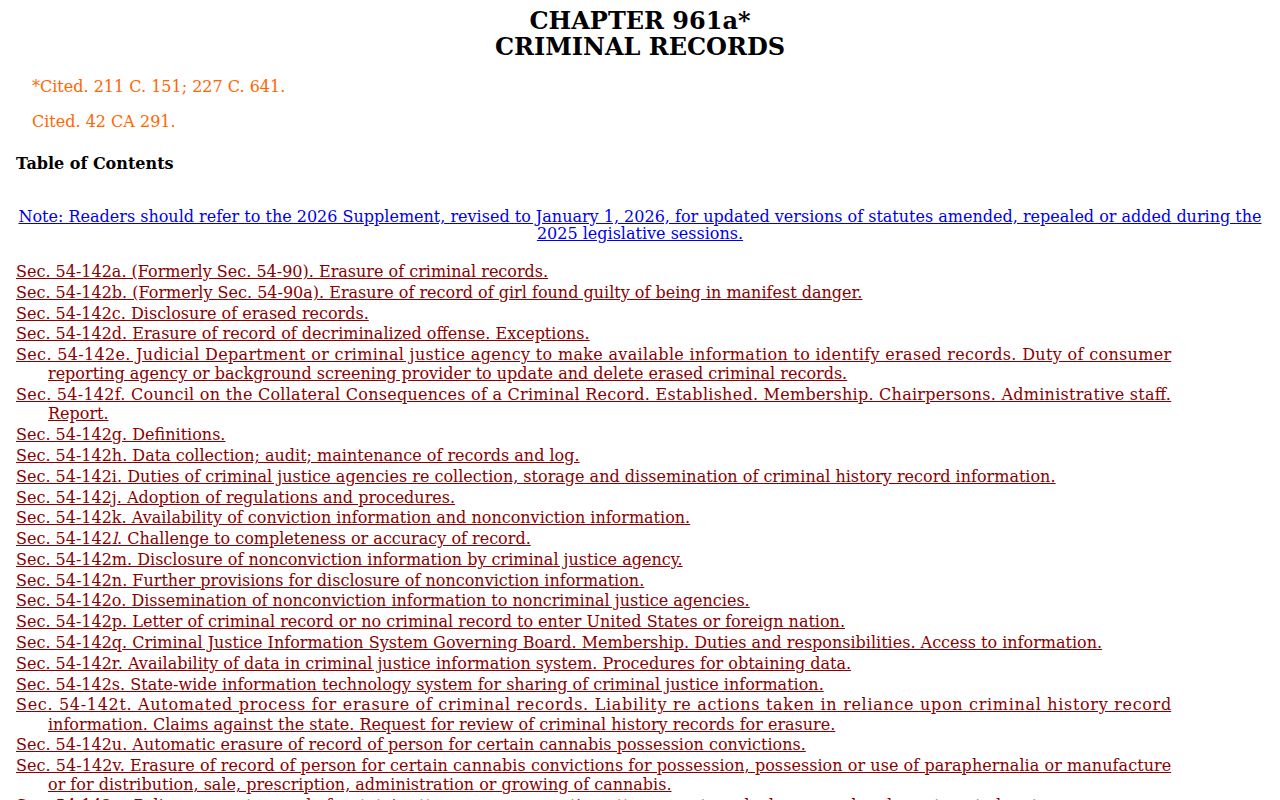
Connecticut’s criminal-history statutes distinguish conviction, current-offender, and nonconviction information and govern dissemination and erasure. The statutory source below helps explain why a complete Tolland County arrest history is not simply open to every requester as a public name search.
The practical result is a layered search: the police report supplies the incident narrative, SPBI maintains the identity-centered history, and the court docket supplies filed charges and outcomes.
Looking Up Tolland County Arrests
No single Tolland County arrest database covers every stage. Use these five official channels in order, preserving the date and time checked because recent custody and pending-case data can change quickly.
- Identify the location and arresting agency. Call Troop C or the municipal department when jurisdiction is uncertain; a case number is the strongest clue.
- Request the incident or arrest report from its creator. CSP and resident-trooper matters use DESPP GovQA or DPS-96-C; Vernon arrests use the Vernon Police records route.
- Search the CT DOC Inmate Information Search by DOC number or by name and date of birth when current detention is the question.
- Search the free Judicial Branch Criminal/Motor Vehicle Case Look-up for a filed case at Rockville G.A. 19, then call the clerk at 860-870-3200 for older or certified material.
- For a longer identity-centered self-review, use the SPBI criminal-history process and CCHRS fingerprint workflow.
Requesting Troop C Arrest Reports
DESPP’s GovQA portal handles CSP and resident-trooper report requests. A requester creates an account, receives invoices and notices there, and pays by credit or debit card. Requests are processed in received order. DPS-96-C also supports mail requests to DESPP Reports & Records Unit, 1111 Country Club Road, Middletown, CT 06457-2389, with a check or money order payable to Treasurer–State of Connecticut.
The form asks for case number, incident place and date, whether an arrest occurred, arrest date, and up to three involved people with role and identifying details when available. The search fee is a nonrefundable $16 even if no report is found; an uncertified copy is $16 and a certified copy is $17. Connecticut Freedom of Information Act access remains subject to redaction of protected victim, witness, juvenile, sealed, and pending-investigation material.
Agency routing matters inside Tolland County. Mansfield’s resident-trooper office is at 4 South Eagleville Road and can be reached at 860-429-6024, but Troop C supplies the wider operational and records umbrella. Ellington’s town police contact is 860-875-1522, with Troop C as the state-police fallback. A Storrs incident handled by UConn Police follows that agency’s records channel instead of Mansfield’s resident-trooper route. Giving the correct agency, date, location, and case number reduces the risk of paying for a search in the wrong system.
Inside a Tolland County Arrest Record
A Tolland County arrest report and a CT DOC custody entry overlap only partly. The report focuses on the event and the agency’s initial action; custody data focuses on detention status. Not every field appears in every released record.
| Case or DOC number | The agency incident number identifies a police file; a CT DOC number identifies a custody record. |
|---|---|
| Date and location | The report can show incident and arrest dates, place, and sometimes time. |
| Arresting agency | Vernon Police, Troop C, a resident trooper unit, UConn Police, or another department that created the file. |
| Initial allegations | Officer-recorded charges or offense information, which can differ from the later court filing. |
| Bond and status | Custody or court channels may show accused/sentenced status, bond, controlling offense, location, or release information. |
| Narrative and evidence | Agency response, property, evidence, and other investigative information, subject to statutory redactions. |
| Photograph handling | A booking photograph may be an identity field in a custody record, but it is not proof of guilt and is not reproduced here. |
Connecticut’s official Clean Slate eligibility explanation shows how later erasure rules can affect qualifying arrest-related and conviction records.
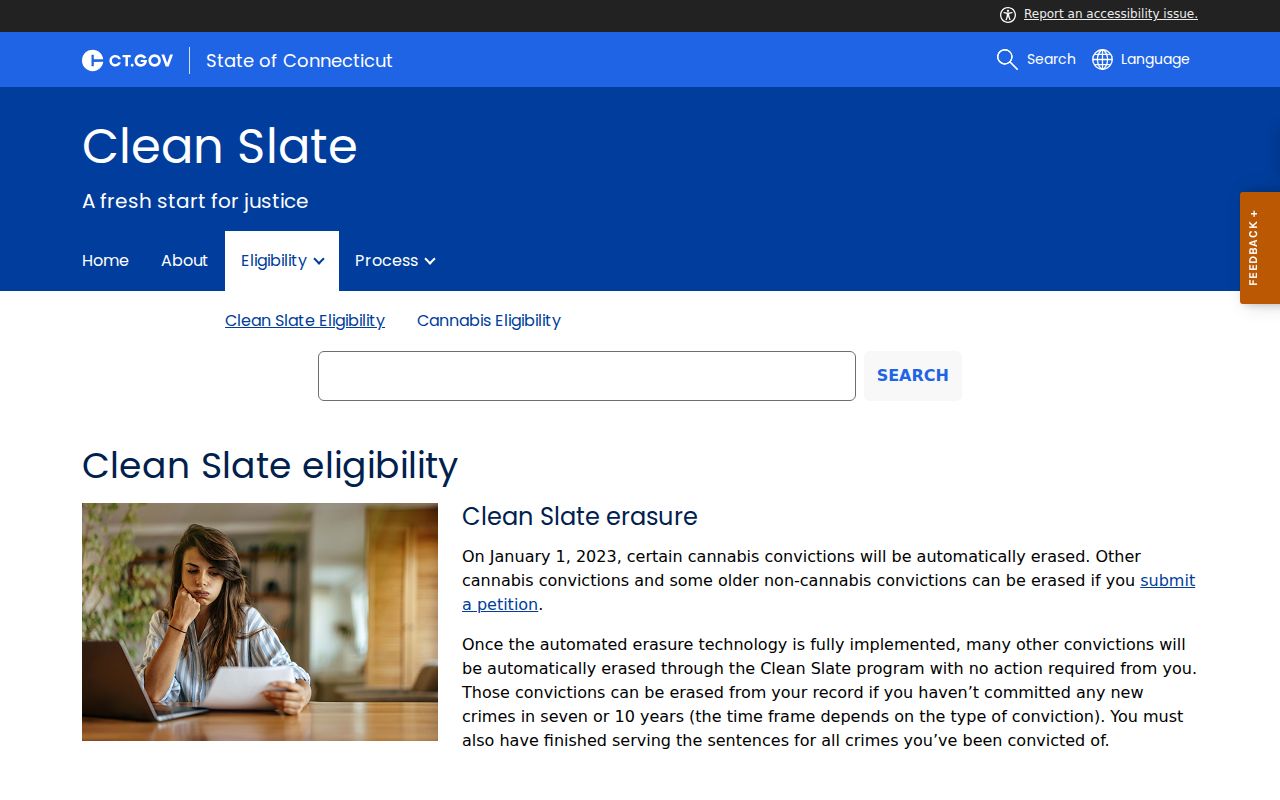
Eligibility, exclusions, waiting periods, and system updates are why an old copy should never be treated as permanently current.
Recent Custody in CT DOC Search
Connecticut has operated a unified state correction system since 1968, so there is no Tolland County jail roster. The CT DOC search can show a detained person as “Accused” before adjudication. Search by DOC number when known, or combine name with date of birth. The service updates daily, status can change rapidly, and Youthful Offender and ICE-only custody records are excluded.
The Connecticut Department of Correction’s official site provides the institutional context for this statewide custody system.
For assistance beyond the locator, CT DOC Public Information is available at 860-692-7780 on weekdays from 8 a.m. to 4:30 p.m., at 24 Wolcott Hill Road in Wethersfield.
Booking Logs and Recent Arrests
No official county booking blotter, sheriff app, or countywide arrest roster exists for Tolland County. Selected State Police announcements may describe recent arrests, but they are not a complete list. A person may also be arrested and released before a later CT DOC search, so absence from current custody does not prove that no arrest occurred.
The better recent-arrest sequence is to request the creating agency’s report, check CT DOC for present custody, and look for filed charges in the Judicial pending-case search. If the online case has not appeared, contact the Rockville G.A. 19 clerk. Court information changes with corrections, pardons, erasures, and filing activity; record the search timestamp rather than turning one result into a permanent claim.
These timing differences are especially important when checking a very recent Tolland County arrest. Police can complete an incident record before prosecutors create a court case. A brief detention can end before the next custody search, and a pending docket can remain after release. Conversely, a CT DOC entry marked “Accused” answers a custody question without answering whether the allegation will produce a conviction. Compare identifiers and event dates across the official sources instead of assuming every system updates simultaneously.
Finding Charges After a Tolland Arrest
The Tolland Judicial District criminal footprint covers 13 towns, and local criminal cases generally route to Rockville G.A. 19. The Judicial Branch defendant search accepts a last-name prefix, optional first initial and birth year, and a court-location filter. A known Rockville criminal docket commonly uses the T19R-CR prefix. The daily docket omits add-on matters, while the pending-case search is the stronger route after prosecutors file.
If a known Tolland County arrest yields no online court result, the charge may not yet be filed, may fall outside display rules, or may be restricted or erased. Juvenile, Youthful Offender, erased, and certain infraction or violation matters are absent by design. The clerk can address a known docket and certified disposition; the police agency remains the source for the original incident narrative.
Online conviction visibility is also time-limited, generally ending no more than ten years after sentencing and sometimes sooner under Connecticut Practice Book rules. That makes the clerk essential for an older known Tolland County case or a certified outcome. It does not turn the clerk’s file into the same product as an SPBI history: the court organizes records by docket, while SPBI compiles reportable cycles around identity and fingerprints. For review of one’s own longer statewide record, the repository process is the better fit.
Arrests Are Not Convictions
An arrest records an officer’s enforcement action based on the legal standard applicable at that stage. A conviction records a guilty or nolo contendere plea or finding and the court’s disposition. CT DOC custody may reflect an accused person, and SPBI history can contain reportable arrest and disposition cycles, so neither should be reduced to a conviction list.
| Arrest Record | Conviction Record |
|---|---|
| Created first by the arresting police agency | Created through Connecticut Superior Court adjudication |
| Documents an arrest and initial allegations | Documents a plea or finding of guilt and sentence |
| Lives with the agency; custody may also appear at CT DOC | Lives in the court file and reportable SPBI history |
| May lead to release, declined filing, dismissal, or acquittal | May lead to sentence, appeal, pardon, or eligible erasure |
Note: An arrest is not proof of guilt, and a booking or accused-status entry must be checked against the final court disposition.
Clean Slate Changes Arrest Visibility
Connecticut uses “erasure” for record clearing. Acquittals, dismissals, qualifying Clean Slate events, and Absolute Pardons can change what an agency or online system may disclose. Erasure is not merely hiding a search result: the governing statute generally restricts disclosure of the erased matter, while exceptions and subject-access provisions still require careful handling.
The official Connecticut Clean Slate hub collects current program guidance and status information.
Because erasure updates can move through police, court, repository, and data-recipient systems at different times, use the official custodian when reviewing or correcting an old Tolland County arrest record.
For eligible petition-based relief, the state provides the JD-CR-202 petition procedure and filing direction.
The petition route is distinct from asking a police records officer to remove or unseal a court record; each custodian must follow the authority that governs its own file.