
Checking Criminal History in Tolland County
The free Connecticut Judicial Branch criminal search is the best public starting point for filed Tolland County cases. It offers pending-case, conviction, docket-number, daily-calendar, and active-warrant paths without a login. Prepare the correct spelling, a first initial, birth year, and likely court location. A public result is only one layer. It may omit older convictions, erased matters, juvenile cases, Youthful Offender records, and some violations.
Use a five-part check so each official custodian answers the question it was built to answer:
- Search pending and conviction cases by defendant, using Rockville G.A. 19 or Tolland Judicial District as the court filter.
- Compare the birth year, court code, case type, and docket number rather than relying on a similar name.
- Open the case trail or call the criminal clerk for older records, certified dispositions, and a known case that is not online.
- Use the arresting police agency for an incident report and CT DOC for current custody or a state sentence.
- For a broader personal history, follow SPBI’s CCHRS and fingerprint-supported record-review process.
The official criminal search gateway shows the available court routes.
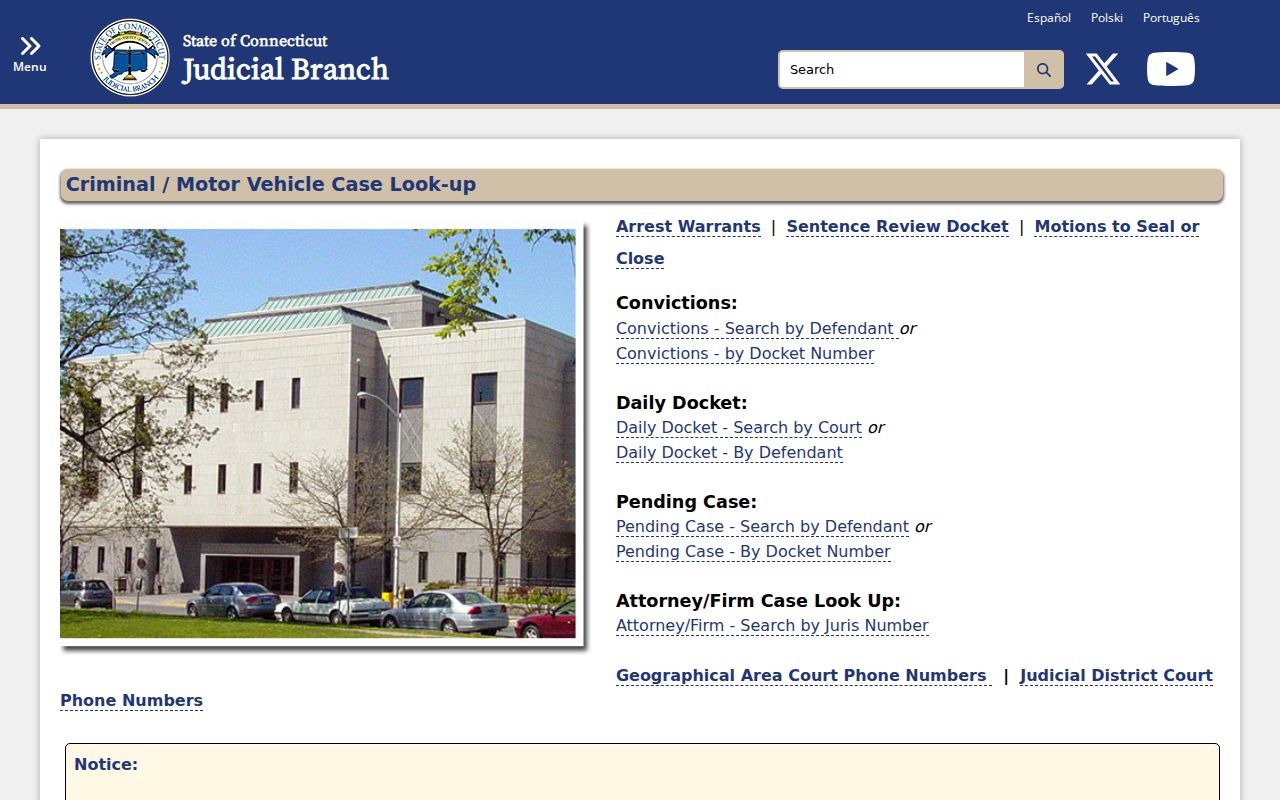
Its free access makes it useful for an initial Tolland County criminal record check, but the court itself warns that online information changes with corrections, erasures, and pardons.
Four Tolland Criminal Record Custodians
Police, courts, corrections, and SPBI maintain different records. The arresting department writes the incident narrative and initial charges. Connecticut Superior Court creates a docket after prosecutors file. CT DOC records detention and state sentences. SPBI compiles fingerprint-supported arrest and disposition cycles around a person’s identity. No one source is a complete “Tolland County database.”
| Record need | Official channel | Best use |
|---|---|---|
| Incident or arrest report | Vernon Police, Troop C, resident troopers, or UConn Police | Narrative, event date, place, and initial allegations |
| Filed criminal case | Judicial Branch search and GA19 clerk | Charges, events, disposition, and certified outcome |
| Custody record | CT DOC Inmate Information Search | Current detention, location, status, or state sentence |
| State personal history | DESPP State Police Bureau of Identification | Identity-centered repository record review |
Connecticut Official Background Checks
The State Police Bureau of Identification is Connecticut’s central criminal-history repository. Its current published cost is $75 for a state criminal-history check. Fingerprint capture at DESPP costs $15, while local law-enforcement agencies may set a separate capture fee. An authorized federal component is $13.25 in most listed categories, with some at $11.25. These amounts should be confirmed before payment.
SPBI directs criminal-history submissions through U.S. mail and does not accept email, fax, drop-off, or pickup for that process. Fingerprinting requires an appointment. A self-review begins with CCHRS pre-enrollment, the correct service code, payment, a printed barcode, and fingerprint capture by a law-enforcement agency. SPBI then delivers the resulting rap sheet through CCHRS.
| Official service | Published amount | Key condition |
|---|---|---|
| Connecticut state history | $75 | Current SPBI repository figure |
| DESPP fingerprint card | $15 | Appointment required; local fees can differ |
| Federal component | $13.25 or $11.25 | Only for an authorized category |
The SPBI process page is the authoritative starting point.
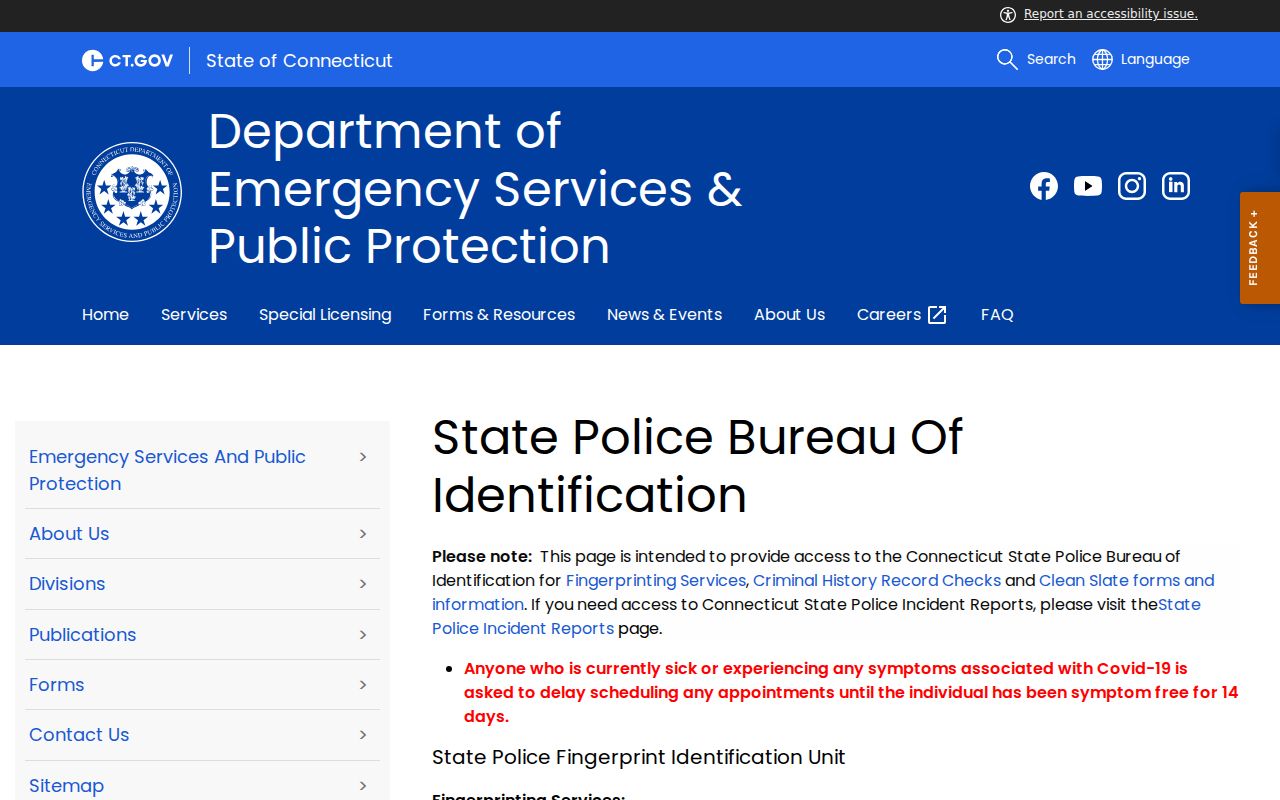
This state repository route is broader than one Tolland County docket, but access to nonconviction information is restricted by Connecticut law.
Two Tolland County Court Counters
Rockville is within Vernon, not Tolland town, and it contains two court buildings that users often confuse. Rockville G.A. 19 at 20 Park Street is the day-to-day criminal venue for the county’s 13-town footprint. Its criminal and habeas clerk can be reached at 860-870-3200. Tolland Judicial District Superior Court is at 69 Brooklyn Street, with its chief clerk at 860-896-4920. Check the docket’s location before mailing a request or visiting.
Both sites offer free public parking. The 69 Brooklyn Street building also has a Court Service Center and Law Library, while the State’s Attorney and Public Defender use the 20 Park Street location. A court counter can supply a certified disposition or older known file that no longer appears online. The published copy rate for older Judicial records is $1 per page under the cited court fee authority.
Criminal Record Types
Tolland County criminal records differ by purpose and custodian. Treating every result as a “background check” hides crucial distinctions. An arrest report describes police action. A docket tracks prosecution. A rap sheet links reportable cycles to identity. A registry profile serves a separate public-notification law.
- Incident and arrest reports come from Vernon Police, CSP Troop C, resident troopers, UConn Police, or another arresting agency.
- Court case files begin after filing in Connecticut Superior Court and record events, outcomes, and sentences.
- Custody entries come from CT DOC and can identify someone as accused rather than sentenced.
- Criminal-history records are SPBI’s identity-centered compilation of reportable arrest and disposition cycles.
- Warrant and registry records use Judicial and DESPP channels with their own limits and warnings.
Warrants also need a separate check. The Judicial Branch active-warrant search is official, but it warns that not every warrant type appears. A court docket may show failure-to-appear or capias activity, while sealed, unexecuted, and juvenile warrants can remain unavailable. Website silence is not a safe basis for concluding that no warrant exists. Someone resolving their own possible warrant should contact the issuing court, counsel, or the responsible law-enforcement agency instead of approaching officers without a plan.
Supervision records split again. Connecticut Judicial Branch Court Support Services Division runs adult probation. CT DOC Parole and Community Services supervises parole in the field, while the Board of Pardons and Paroles handles release decisions and records. A court docket may show the sentence, and a DOC entry may show a special-parole date, but neither is a complete public view of an internal supervision file. The Connecticut Sex Offender Registry is another DESPP system with town, ZIP, surname, and address-area search options plus proximity notifications. Its public profiles support safety awareness and must not be treated as a measure of current individual risk.
DESPP’s official service hub connects many State Police functions.
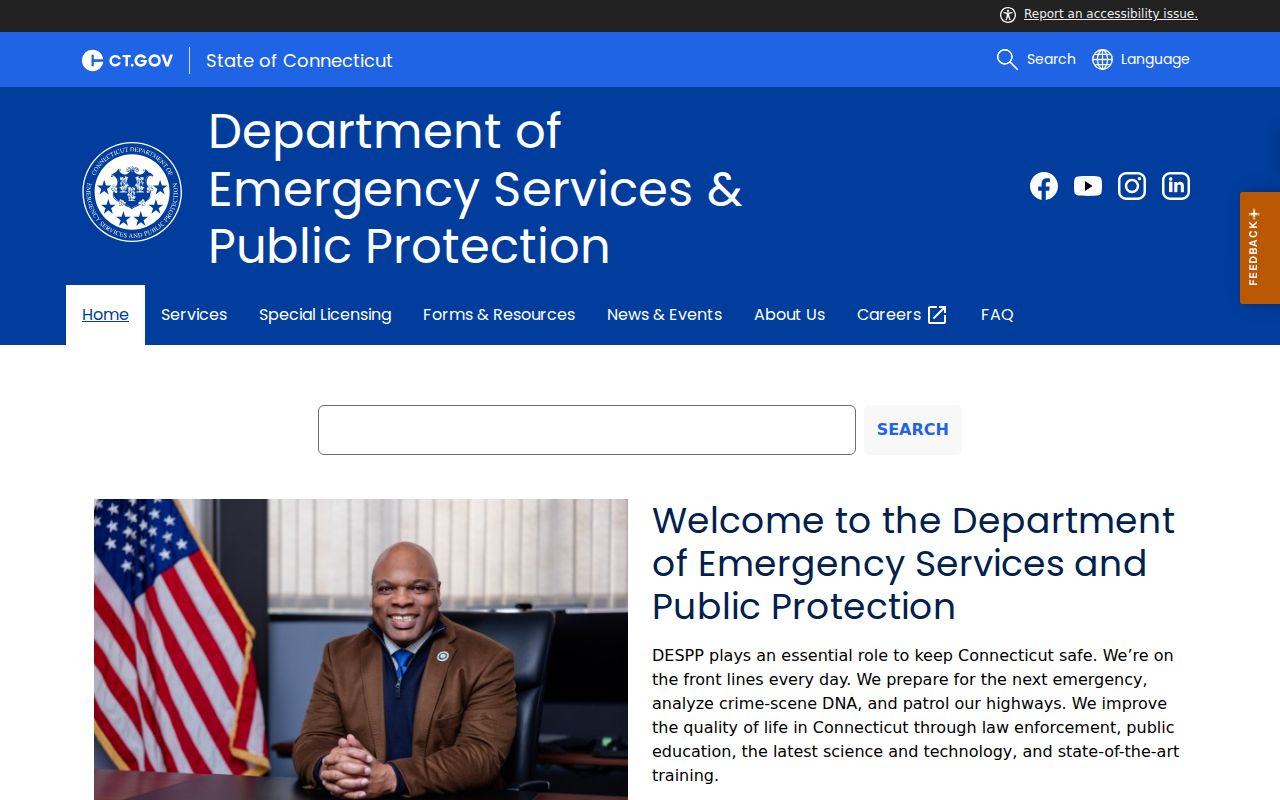
The hub does not replace the court clerk, local police records desk, or CT DOC when those offices own the underlying Tolland County record.
Reading Tolland Criminal Docket Codes
A Rockville criminal docket commonly follows the control-built form T19R-CR-YY-NNNNNNN-X. T19R identifies Rockville G.A. 19, CR means criminal, the two-digit year marks the filing year, seven digits supply the sequence, and the final character is a suffix. TTD is the code for Tolland Judicial District. These codes narrow a search far more reliably than a name alone.
The conviction defendant form asks for a last-name prefix and permits a first initial, birth year, one-year range adjustment, court location, and criminal or motor-vehicle category. The pending form adds related referral categories. Match every available field and note the result timestamp.
The official conviction defendant search demonstrates this field structure.
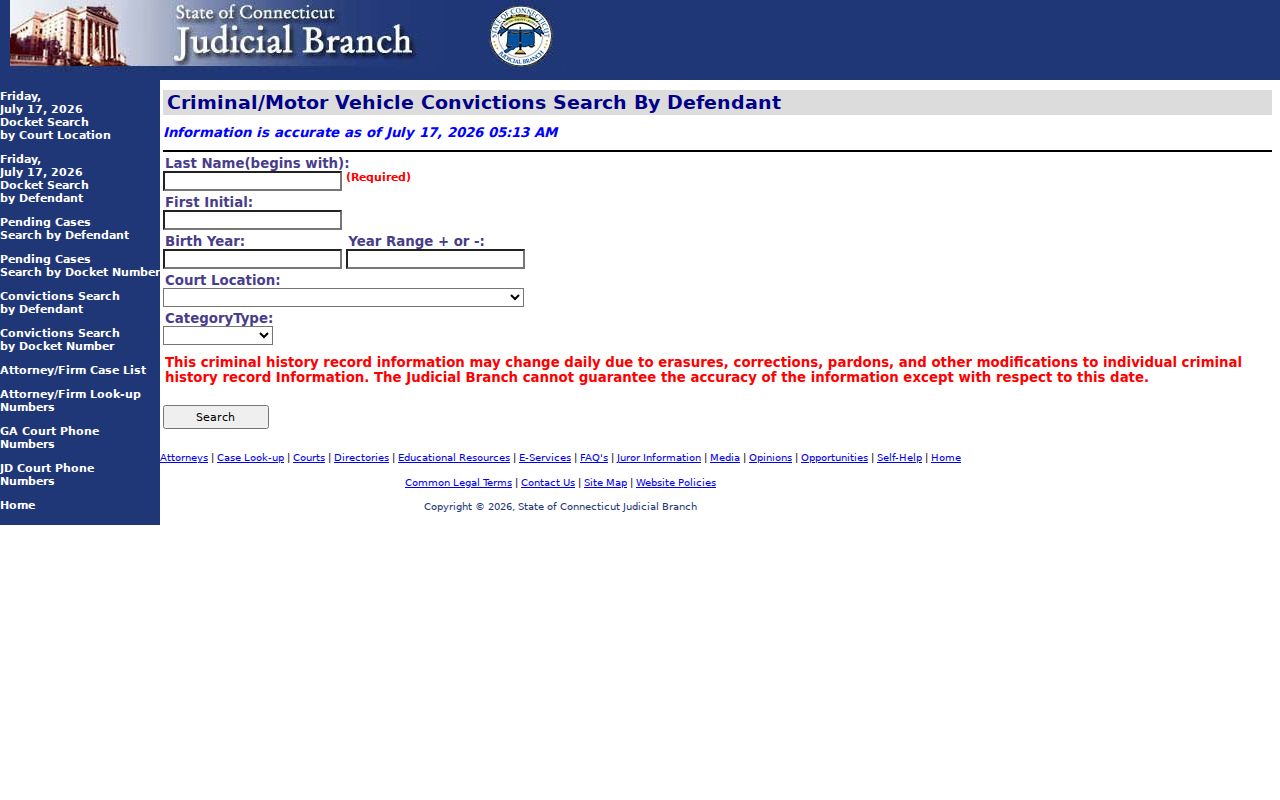
A matching docket identifies a court file, not a complete statewide rap sheet or police incident narrative.
Inside a Tolland County Criminal Record
The fields depend on the record. Connecticut criminal-history information can include identity, arrest, release, detention, formal charges, pleas, trials, sentences, appeals, incarceration, parole, supervision, and release. Intelligence, ordinary investigative information, and presentence investigations are not part of the statutory CHRI definition. Public court and custody displays expose only selected fields.
| Name & identifiers | Name, birth-year or date-of-birth data, and agency or DOC numbers used to distinguish records. |
|---|---|
| Arrest data | Arresting agency, case number, date, location, and initial alleged offense where releasable. |
| Court charges | Charges as filed, court code, docket number, events, pleas, and motions. |
| Disposition | The outcome for each charge, such as conviction, dismissal, acquittal, or nolle prosequi. |
| Sentence | Court-ordered incarceration, probation, fines, or other terms when applicable. |
| Custody status | CT DOC may show accused or sentenced status, location, bond, controlling offense, and release information. |
- Disposition
- The final outcome recorded for a charge.
- Nolle prosequi
- A prosecutor’s decision not to continue a charge, with Connecticut erasure consequences after the statutory period.
- Recognizance
- Release based on a promise and conditions rather than a cash bond.
- Capias
- A court order to arrest or bring a person before the court.
No Tolland Sheriff or Jail
Connecticut abolished county sheriffs, and CT DOC has run a unified custody system since 1968. Tolland County therefore has no sheriff’s records unit, county jail, or county booking roster. CSP Troop C is the functional regional police-records hub for towns without an organized municipal department. Municipal and campus agencies still keep the files they create.
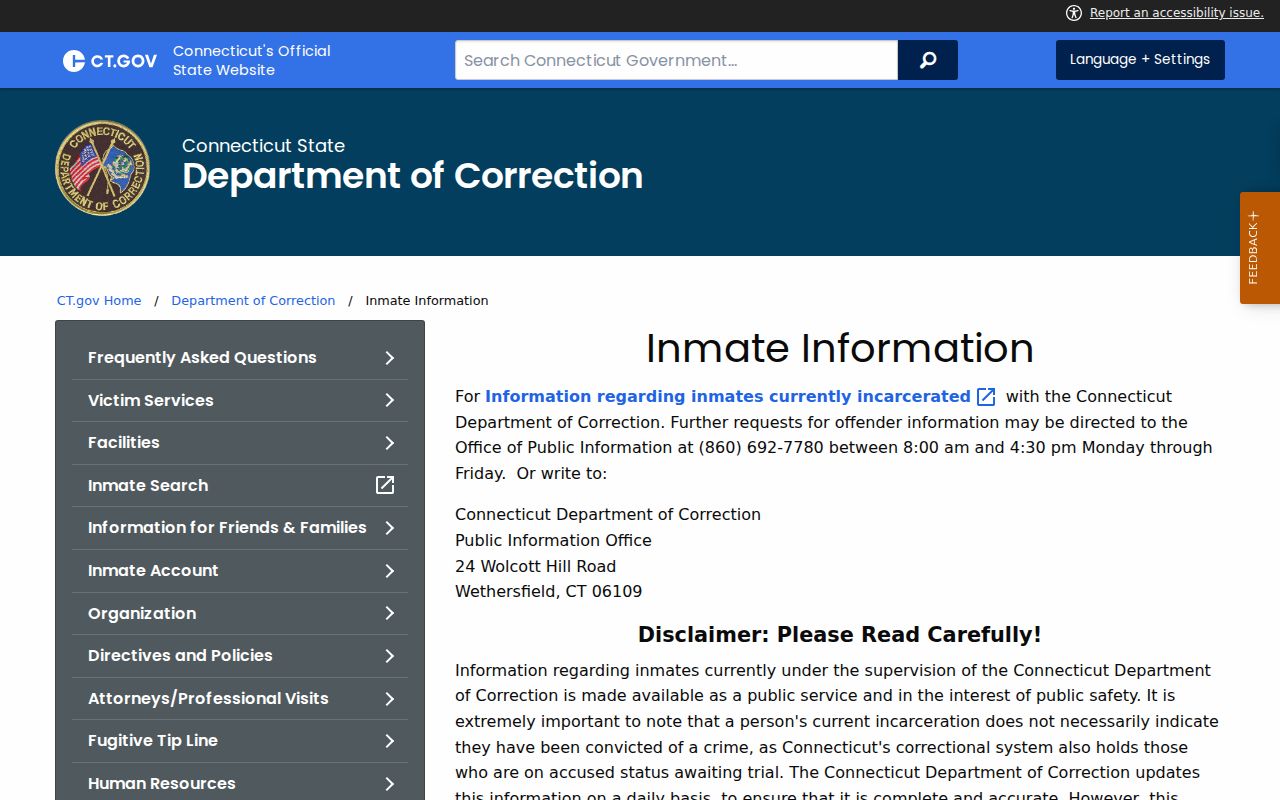
If detention followed an arrest, search CT DOC by inmate number or by name and date of birth. The service updates daily, excludes Youthful Offender and ICE-only custody, and may label a person “Accused.” Current custody never proves conviction.
The official Inmate Information Search is the statewide lookup.
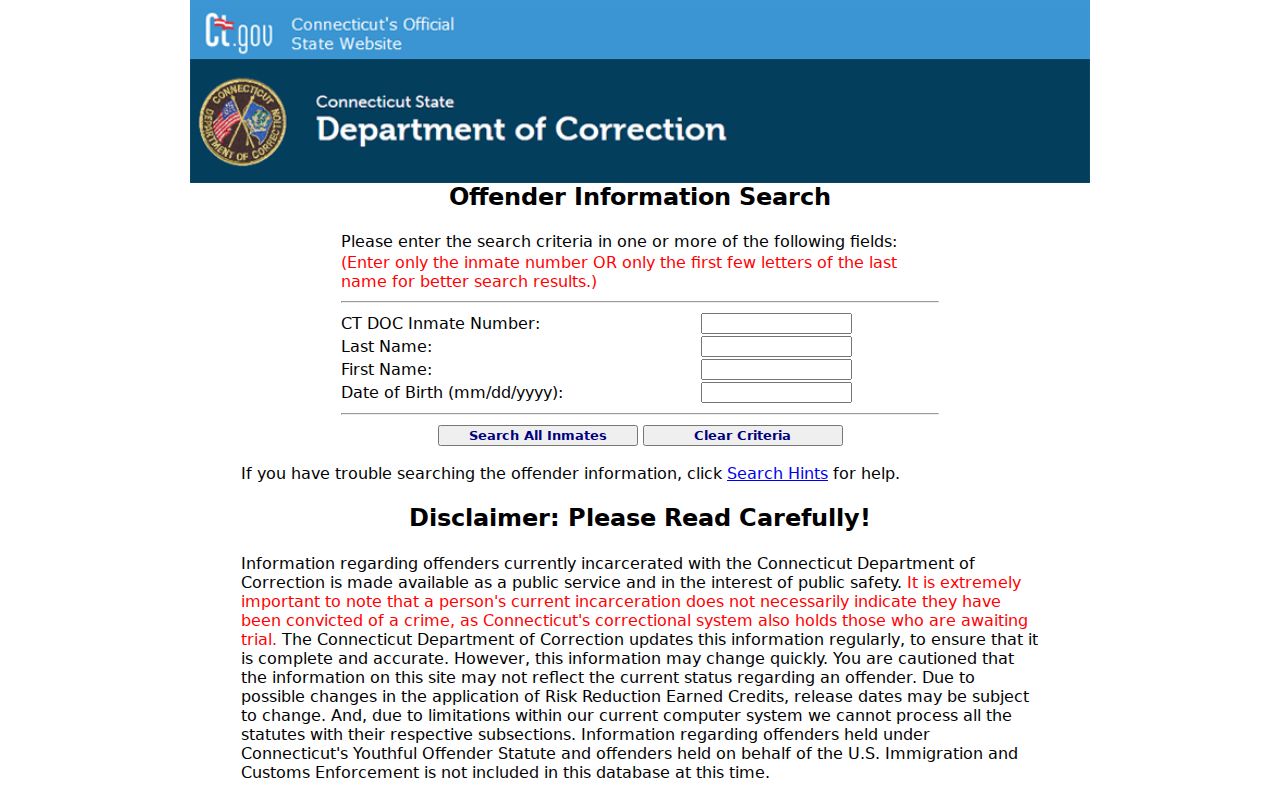
Use it for present custody, then verify the filed case and disposition through the court channel.
Public Access Laws in Connecticut
The Connecticut Freedom of Information Act creates a broad right to inspect executive-agency records, but it contains exemptions. Court adjudicative files follow Judicial Branch rules. A police agency should separate releasable arrest facts from protected investigative content where practical, while juvenile, victim, witness, sealed, and prejudicial pending-case information can remain restricted.
Key Connecticut laws:
CGS §§1-210 and 1-212 create the general inspection and copy framework, subject to exemptions and fee rules.
CGS §1-215 defines the basic arrest record available during a pending prosecution.
CGS §§54-142g and 54-142k define criminal-history categories, open conviction information, and restrict nonconviction information.
CGS §54-142a governs erasure after qualifying dismissals, acquittals, and Clean Slate events.
A “no result” is not proof of no Tolland County criminal history. The case may be too old for online display, not yet filed, erased, restricted, or held by another custodian.
Tolland County Troop C Records
CSP and resident-trooper incident reports use DESPP Reports & Records, its GovQA portal, or DPS-96-C. GovQA requires an account, places invoices in that account, accepts card payments, and sends notices from a govqa.us address. The $16 search fee is nonrefundable even when no report is located. Uncertified copies are $16 and certified copies are $17.
DPS-96-C asks for the case number, incident location and date, arrest status and date, and involved people. Mail requests go to 1111 Country Club Road, Middletown, with payment to Treasurer–State of Connecticut. Vernon Police records use the municipal route instead, and UConn Police files remain separate.
Police reports are broader than a court result but not automatically public in full. A basic pending-prosecution arrest record can include identity, arrest time and place, offense, and the applicable official report or affidavit. Investigative narratives can still redact protected witnesses, victims, confidential sources, techniques, juvenile information, or material that could harm a prospective action. The agency should release separable public portions where practical. GovQA controls the executive-agency request, while a court clerk applies Judicial rules to court documents.
Crash records use another branch. Many simple crashes appear through the linked BuyCrash service within 30 business days. Connecticut’s free Accident Information Summary remains available for 30 days and supplies preliminary party, vehicle, insurance, and short-summary data, but it is not the official report. Serious or fatal crashes, missing reports after 30 days, and investigative files return to GovQA. These channels matter when a Tolland County police event does not produce a criminal docket.
The State Police forms index points users to current DESPP forms.
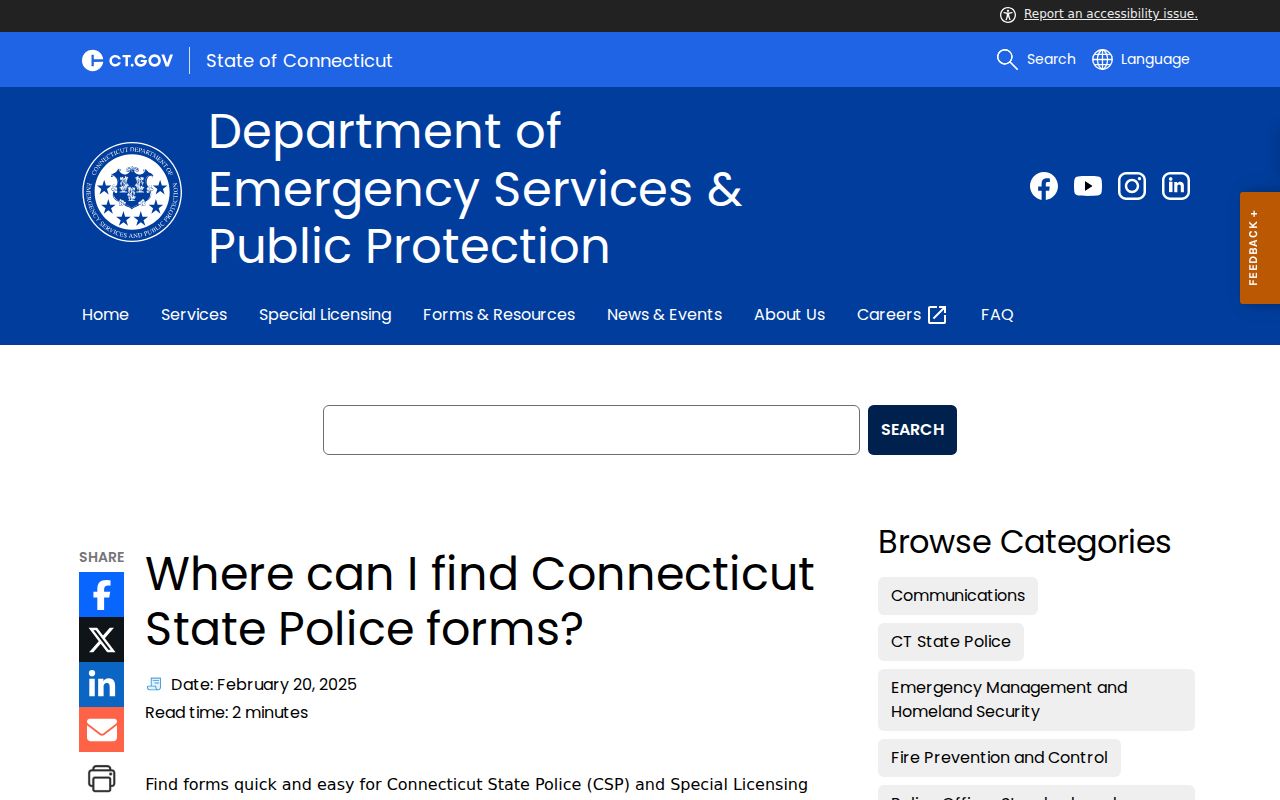
The correct form and case identifier help prevent a paid search in the wrong agency’s files.
Sealed, Expunged, and Restricted Records
Connecticut calls record clearing “erasure.” Acquittals and dismissals generally erase after appeal time or final appeal, subject to exceptions. Clean Slate can erase eligible convictions automatically or through a petition route. Most eligible misdemeanors use a seven-year threshold, while eligible class D or E and qualifying unclassified felonies generally use ten years. All incarceration and supervision must be complete, and no Connecticut charge may be pending.
Exclusions include specified family-violence, sexual, assault, firearm, and other offenses. Eligible pre-2000 cases use JD-CR-202 in the sentencing court. An Absolute Pardon is another distinct mechanism that erases the official conviction record. Juvenile and Youthful Offender information remains outside ordinary public conviction results. These rules change lawful disclosure, not just web visibility, and implementation timing can produce temporary differences between systems.
If an expected automatic erasure is missing, official instructions direct the person to obtain a current history and use the DESPP Clean Slate review process. Bulk criminal-record purchasers also receive erasure updates and must permanently delete affected information within the statutory period. A police records officer cannot unseal a Judicial file, and a clerk does not decide an executive-agency FOIA request. Corrections must begin with the custodian responsible for the questioned record.
When Tolland Court Search Is Empty
A recent police report can exist before prosecutors file a case. An older conviction may have passed the online display period, which generally ends no more than ten years after sentencing and can end sooner. Erasure, Youthful Offender status, juvenile treatment, and excluded violation categories also produce intentional omissions. Start by checking spelling, birth year, and both Rockville court choices.
Next, contact the GA19 clerk for a known criminal matter, request the incident report from its creating agency, and use SPBI for a broader personal record. For a newly filed matter, the pending defendant search may be more useful than the conviction search.
The official pending-case search provides the relevant defendant route.
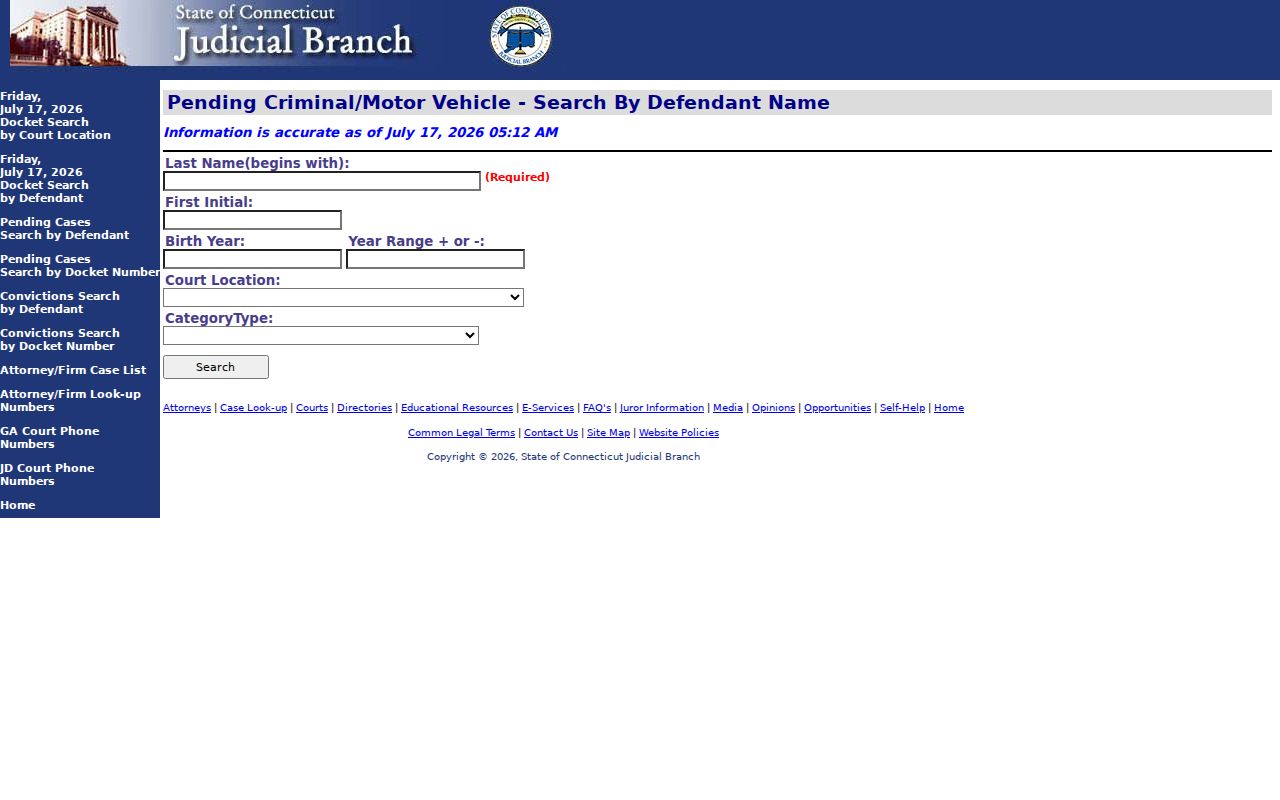
Save the search date and use the clerk for a certified or final Tolland County court outcome.
Tolland County Criminal Records by City
The three largest Tolland County municipalities follow different police-record routes, although each sends filed criminal cases to Rockville G.A. 19 and detention to CT DOC. Vernon has its own organized police department. Mansfield and Ellington use resident state troopers with Troop C support. None has a municipal criminal court or local jail.
Vernon Criminal Records
30,215 residents · Vernon Police holds municipal reports; Rockville contains both principal court buildings.
Mansfield Criminal Records
25,892 residents · Resident troopers, Troop C, and UConn Police use distinct records routes.
Ellington Criminal Records
16,426 residents · Resident-trooper reports route through DESPP and filed cases through GA19.
CCHRS Tolland Record Pre-Enrollment
CCHRS is the official pre-enrollment route for a fingerprint-supported Connecticut personal history. Choose the correct service, pay through the system, print the barcode, and take it to a law-enforcement fingerprint site. If Livescan is not available, follow the hard-copy card instructions. Service codes matter, especially for a State Police report required in an Absolute Pardon application.
The CCHRS pre-enrollment portal begins that official workflow.
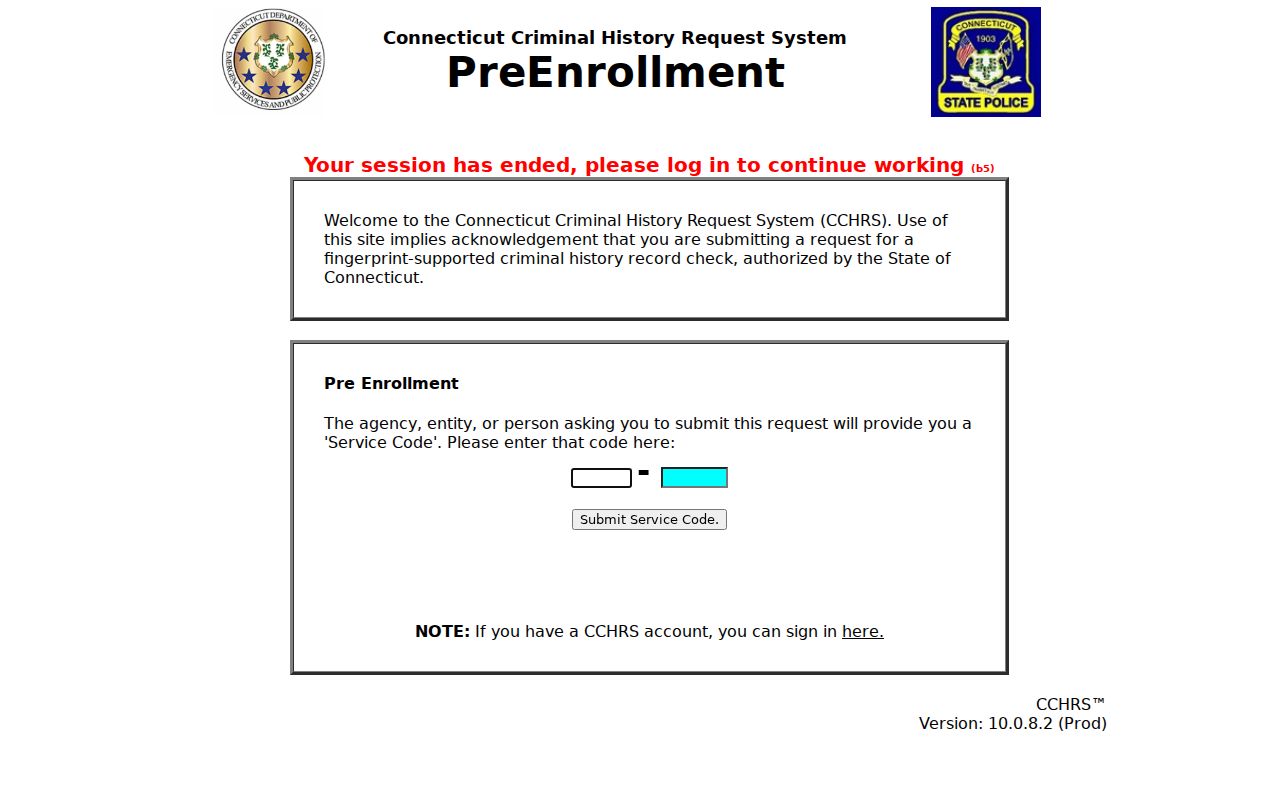
This process is designed for an authoritative repository record, not a substitute for the court docket or one agency’s incident narrative.
The CT DOC inmate-information explanation separately describes custody search limits and status fields.
Keeping CCHRS and CT DOC separate prevents a common error: treating a custody snapshot as a full criminal-history report.