
Sex Offender Checks in Tolland County
Tolland County has no sheriff, county registration desk, or county registry. The Connecticut Sex Offender Registry is maintained centrally by the Department of Emergency Services and Public Protection, Division of State Police. Use the state search for a Tolland County address, town, ZIP, or name. The National Sex Offender Public Website adds an official cross-state layer when a search crosses Connecticut's border.
Location searches tend to fit neighborhood and family safety questions better than a name alone. A name can be shared, misspelled, or tied to an old address. Match an official profile with care. Court-ordered dissemination restrictions can also make the public set narrower than administrative records known to DESPP.
Local law enforcement still has a role. Vernon has an organized police department; Mansfield and Ellington use resident troopers under State Police Troop C. They receive notice when enforcement action may be needed, but they do not replace the central registry.
Tolland Registration Is Central
Registration takes place at the DESPP Sex Offender Registry Unit, 1111 Country Club Road in Middletown. Public hours are weekdays from 9:00 a.m. to 3:00 p.m., excluding holidays. The unit's phone is 860-685-8060, fax is 860-772-1730, and email is SORU@ct.gov. This state office, rather than a Tolland County sheriff, receives and maintains the registration record.
Sex Offender Registry Unit
1111 Country Club Road
Middletown, CT 06457
860-685-8060
Weekdays, 9:00 a.m. to 3:00 p.m.
The local link is enforcement and notice. For example, the official Vernon Police Department page identifies the organized department serving the county's largest municipality.
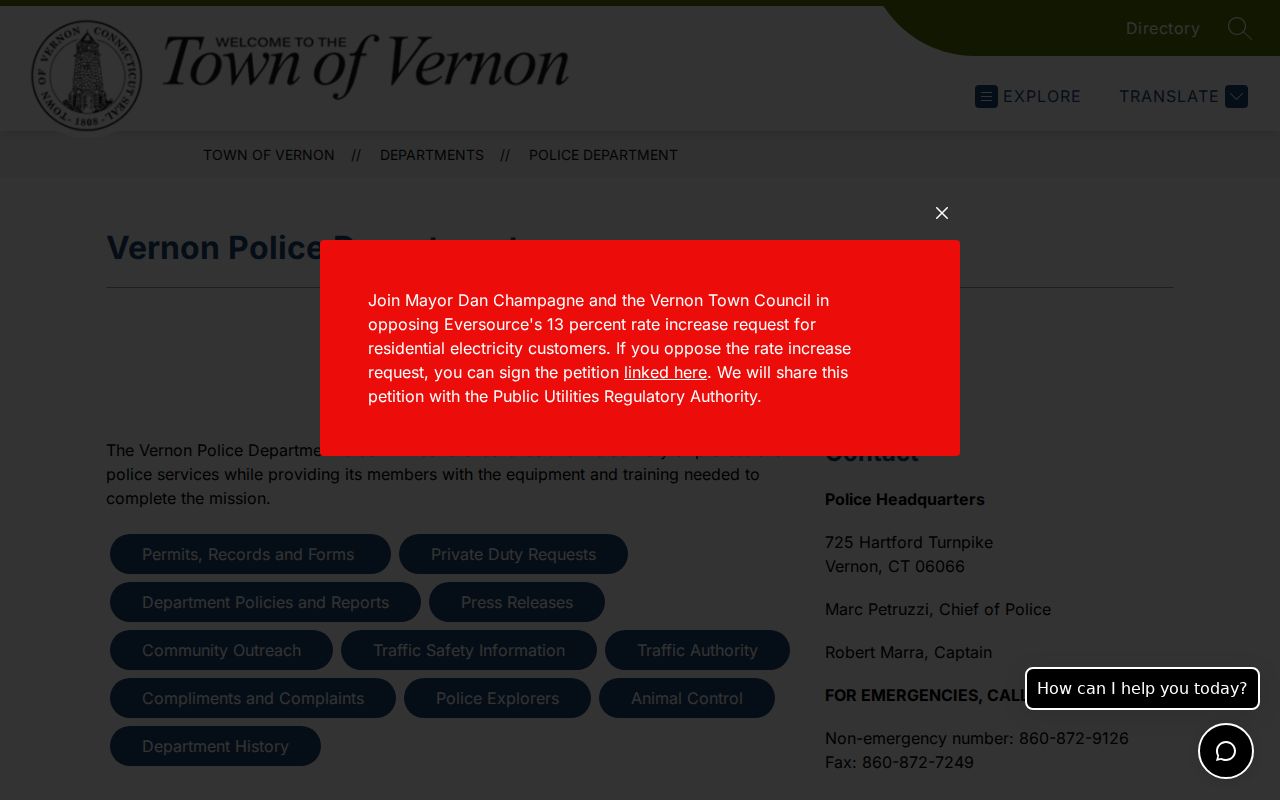
Vernon Police may receive a verification-failure referral, while DESPP remains the registration repository.
How to Search Connecticut's Registry
The registry offers several ways to frame a Tolland County sex offender search. Town or ZIP can define a broad local area. An address and radius can focus on a point. The vendor interface has historically allowed radii up to five miles, but live choices can change, so read the current control before relying on a set distance. Free email notification can reduce the need to repeat the same address search.
- Open the official Connecticut registry and review its conditions of use.
- Choose a town, ZIP, last name, or street-address search that fits the safety question.
- Use the map or list view to inspect possible matches, then open the official profile.
- Compare the profile's identifiers, registration category, address, and status without drawing conclusions beyond the record.
| Field Label | Type | Required | Notes |
|---|---|---|---|
| Last Name | Text | No | Name search |
| Town/City | Select/text | No | Residence-area search |
| ZIP | Text | No | Geographic search |
| Street/Address | Text | No | Proximity search |
| Radius | Select | No | Historically up to five miles; verify live options |
| Map/List | View control | No | Changes presentation |
| Email Alert | Web form | No | Notice when a registrant enters the chosen area |
Note: The registry vendor can change its controls, so confirm the radius and dropdown labels shown during the current search.
Tolland Police Verification Role
CGS §54-257 gives DESPP the central repository and residence-verification work. If a required verification is not returned, DESPP notifies the organized police department or State Police troop that has jurisdiction. In Vernon, that can mean Vernon Police. In Mansfield and Ellington, Troop C and the resident-trooper structure provide the local link.
The Mansfield Resident State Trooper page illustrates this local arrangement.
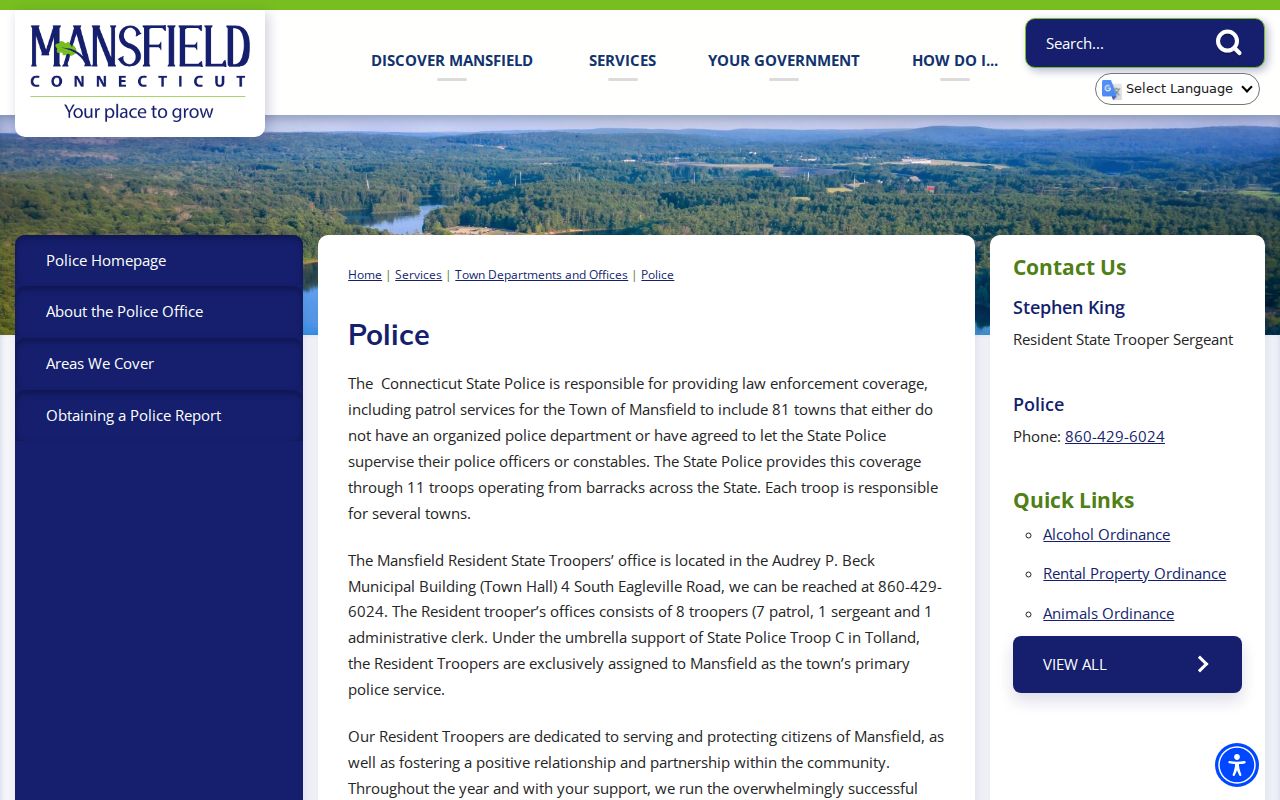
Mansfield's police page routes residents to the correct local law-enforcement channel, while central registration remains in Middletown.
A police records request is a different process. Mansfield's official report instructions explain how local and State Police reports are obtained.
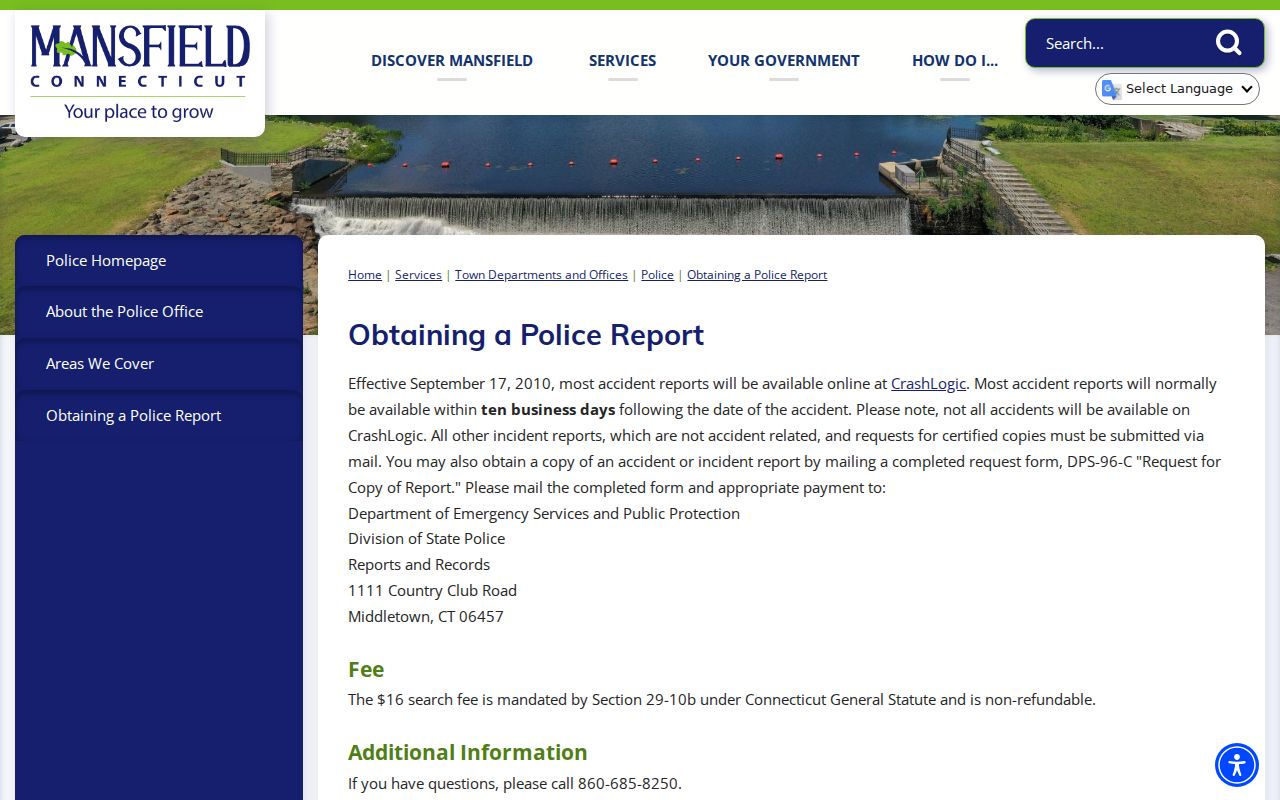
That report channel may document an enforcement event, but it is not the public registry search itself.
Inside a Registry Profile
Official descriptions allow a careful profile inventory without republishing any private individual's entry. Public information can include the identifiers needed to distinguish a person, a registered address, photo, the registrable offense, and details tied to the conviction and registration duty. The administrative dataset is broader than what every public profile displays.
| Name & Aliases | Known identifying names transmitted to the registry |
|---|---|
| Photo & Description | Photo and physical identifiers used to aid a careful match |
| Residence | The registered street address, city or town, and ZIP when publicly available |
| Offense Record | Registrable offense, conviction place and date, and related summary data |
| Case Identifiers | Court, geographical area, docket, arresting agency, and local case number where displayed |
| Status Data | Release date, registration duty, and probation or parole status where public |
DNA, online identifiers, treatment facts, and other data collected for administration should not be assumed to be public-profile fields. CGS §54-255 also permits restricted public dissemination in specified cases.
Tolland Registry Profile Limits
A registry listing does not state that a person will commit a new offense. It is not an individualized dangerousness score. It records a legal duty based on an offense category and the governing order. That distinction matters when using the search for family and neighborhood awareness.
Supervision is another separate system. A profile or statutory transmission may include probation or parole status, yet detailed supervision notes are not a public registry field. Connecticut Judicial Branch Adult Probation and CT DOC Parole and Community Services handle their own records and duties.
The Adult Probation directory shows the state-run probation structure.
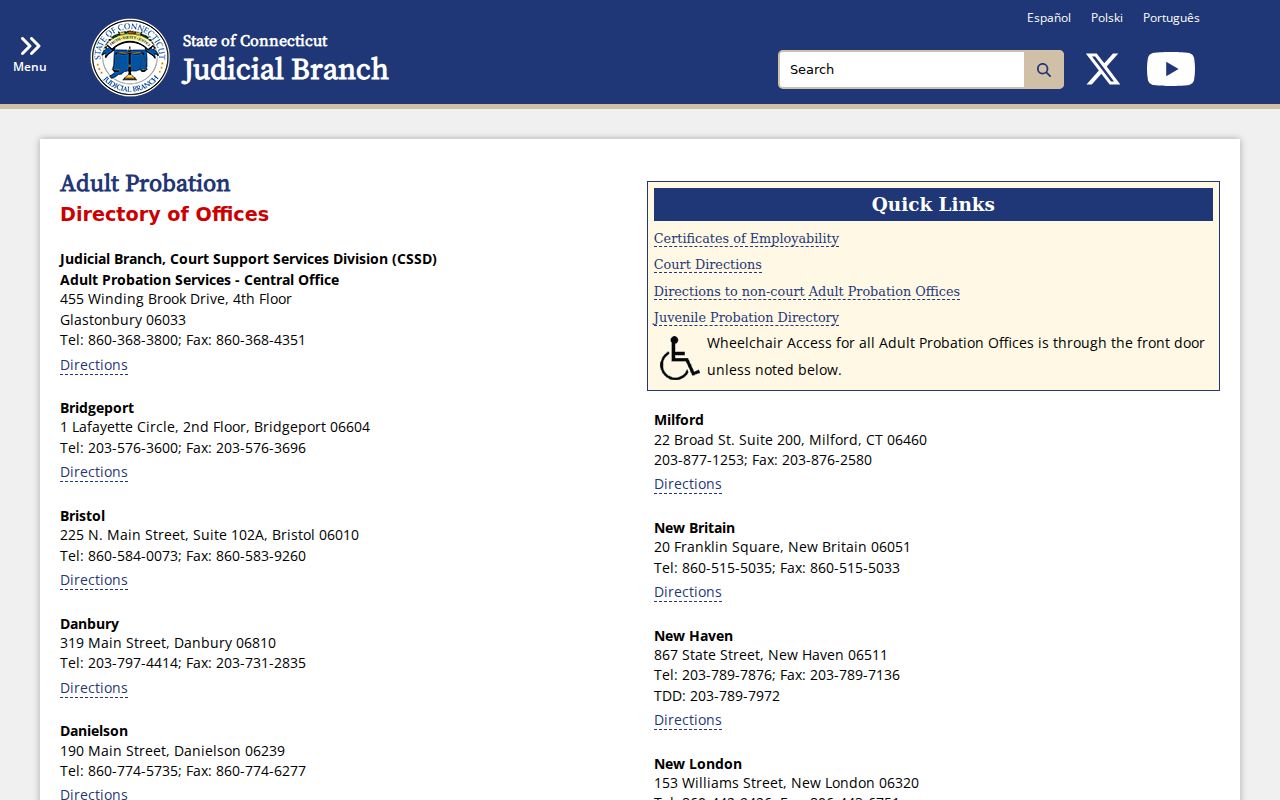
This directory is a contact layer, not a substitute for the Connecticut registry profile.
The official Parole and Community Services page identifies the separate field-supervision structure.
Keep registration, probation, parole, and court records in their own lanes.
Connecticut Registration Levels and Requirements
Connecticut does not publish a federal-style Tier I, II, and III table. Its public scheme is based on offense categories and statutes. Duration and verification frequency follow that category. A ten-year duty is common for specified nonviolent categories, while sexually violent offenses generally carry lifetime registration and much more frequent verification.
| Connecticut Category | General Duration | Verification |
|---|---|---|
| Offense against a minor or nonviolent sexual offense, §54-251 | Generally 10 years | Annually |
| Sexually violent offense, §54-252 | Life | Every 90 days |
| Felony for a sexual purpose, §54-254 | Generally 10 years; court may order life | Annual unless lifetime rule controls |
| Out-of-state duty, §54-253 | Connecticut category and/or other jurisdiction's lifetime duty | Corresponding rule |
The full statute context appears in CGS Chapter 969. Labels should be read from the Connecticut category, not converted into an unsupported tier.
Report Tolland Registry Noncompliance
Suspected noncompliance should go to the DESPP Sex Offender Registry Unit or to the police agency with jurisdiction. Provide clear facts about the concern rather than trying to investigate or confront anyone. DESPP can route verification failures to Vernon Police, Troop C, or another proper agency.
The registry unit accepts calls at 860-685-8060 and email at SORU@ct.gov. In a current emergency, use the emergency channel. A general concern should use the registry or police contact. The public search itself does not file an enforcement report.
The Connecticut Board of Pardons and Paroles is also distinct. Its official contact page handles board contacts and its own freedom-of-information channel.
A board contact cannot replace a compliance report to DESPP or local police.
Tolland Search Beyond Connecticut
The National Sex Offender Public Website is the official federal search layer for participating jurisdictions. It is useful when a person moved across state lines or when a place-based safety check should extend beyond Connecticut. The state registry remains the primary source for Connecticut-specific categories, verification rules, and local reporting contacts.
| Tool | Best Use | Limit |
|---|---|---|
| Connecticut Registry | Town, ZIP, name, address-area, and local alerts | Connecticut public set, subject to disclosure limits |
| NSOPW | Official cross-state search | Source coverage and profile fields vary by jurisdiction |
| Local Police or Troop C | Report suspected noncompliance | Not a replacement public registry |
Use both official search layers when the facts cross a border, and confirm any result against the source jurisdiction's current profile.
Community Notification and Lawful Use
Connecticut's registry supports community awareness and personal or family safety planning. Email proximity alerts can notify a subscriber when a registrant enters a selected area. Public access does not grant permission to threaten, follow, harass, or punish a listed person or anyone in that household.
Use registry data lawfully: CGS §54-258a warns that using registry information to injure, harass, or commit a crime can lead to criminal prosecution.
Read the record narrowly. A listing reflects a statutory registration status. It does not prove a new offense, does not promise that every administrative record is public, and does not replace emergency services or a report to DESPP. Community notification works best when facts are checked through the official profile and concerns are sent to the proper agency.
Note: Never contact or confront a listed person based on a Tolland County registry result.